
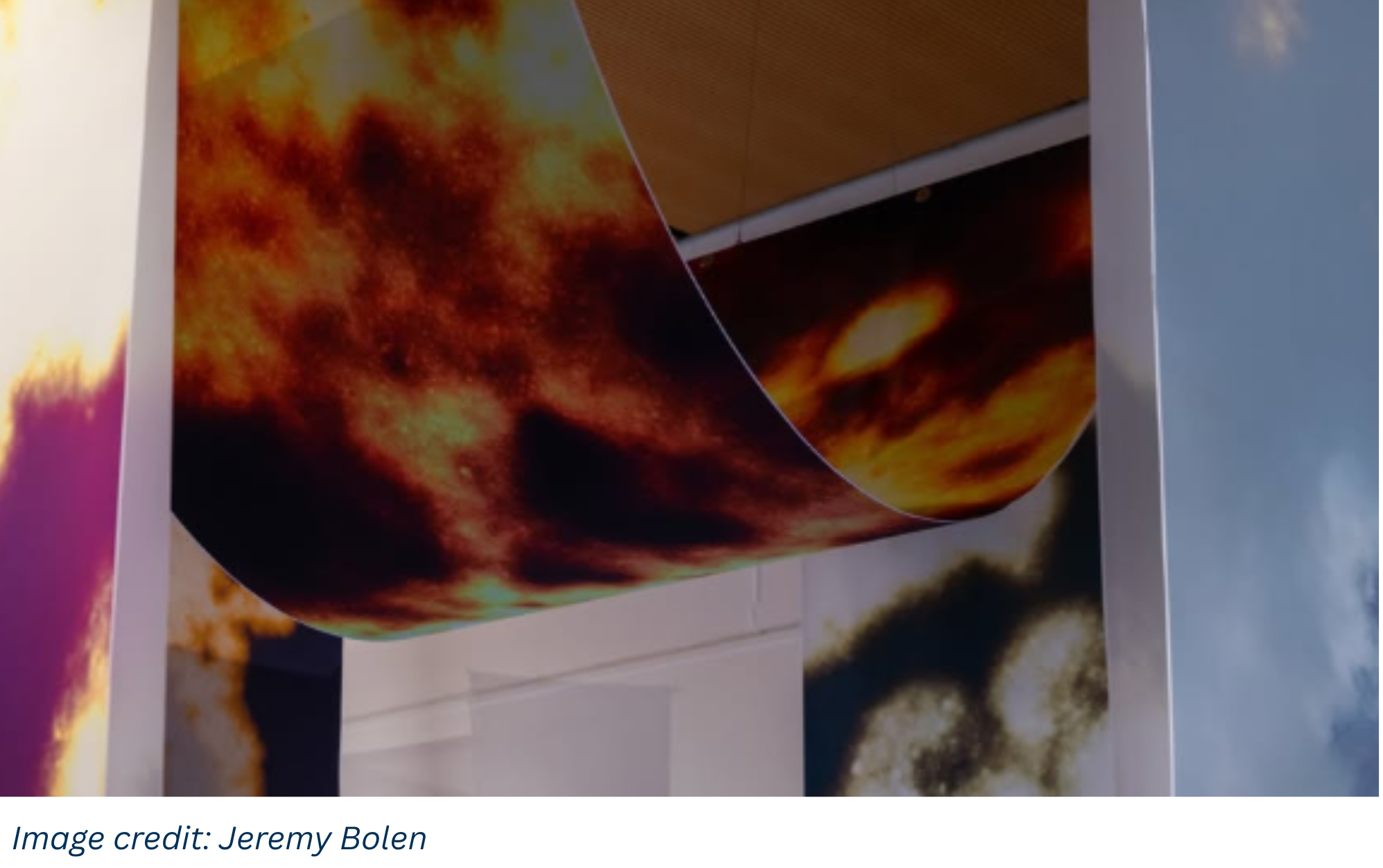
School of Materials Science and Engineering (MSE) Associate Professor and Goizueta Early Career Faculty Chair, Juan-Pablo Correa-Baena, recently participated in Crossing Grounds: Art, Design, and Technology, an international exhibition presented in partnership with the Korea Foundation. The exhibition brings together 16 interdisciplinary projects that explore the intersections of art, design, science, and technology through the themes of Ground, Passage, and Exchange.
Correa-Baena collaborated with Chicago-based artist Jeremy Bolen on an installation that examines solar energy and humanity's evolving relationship with sunlight. The project grew out of ongoing conversations between the two collaborators and encourages viewers to consider the opportunities and challenges of harnessing renewable energy.
"I was excited by the opportunity to bring scientific research into a very different context," Correa-Baena said. "The themes of Ground, Passage, and Exchange strongly connect with how materials, energy, and technology move between the laboratory, society, and the environment."
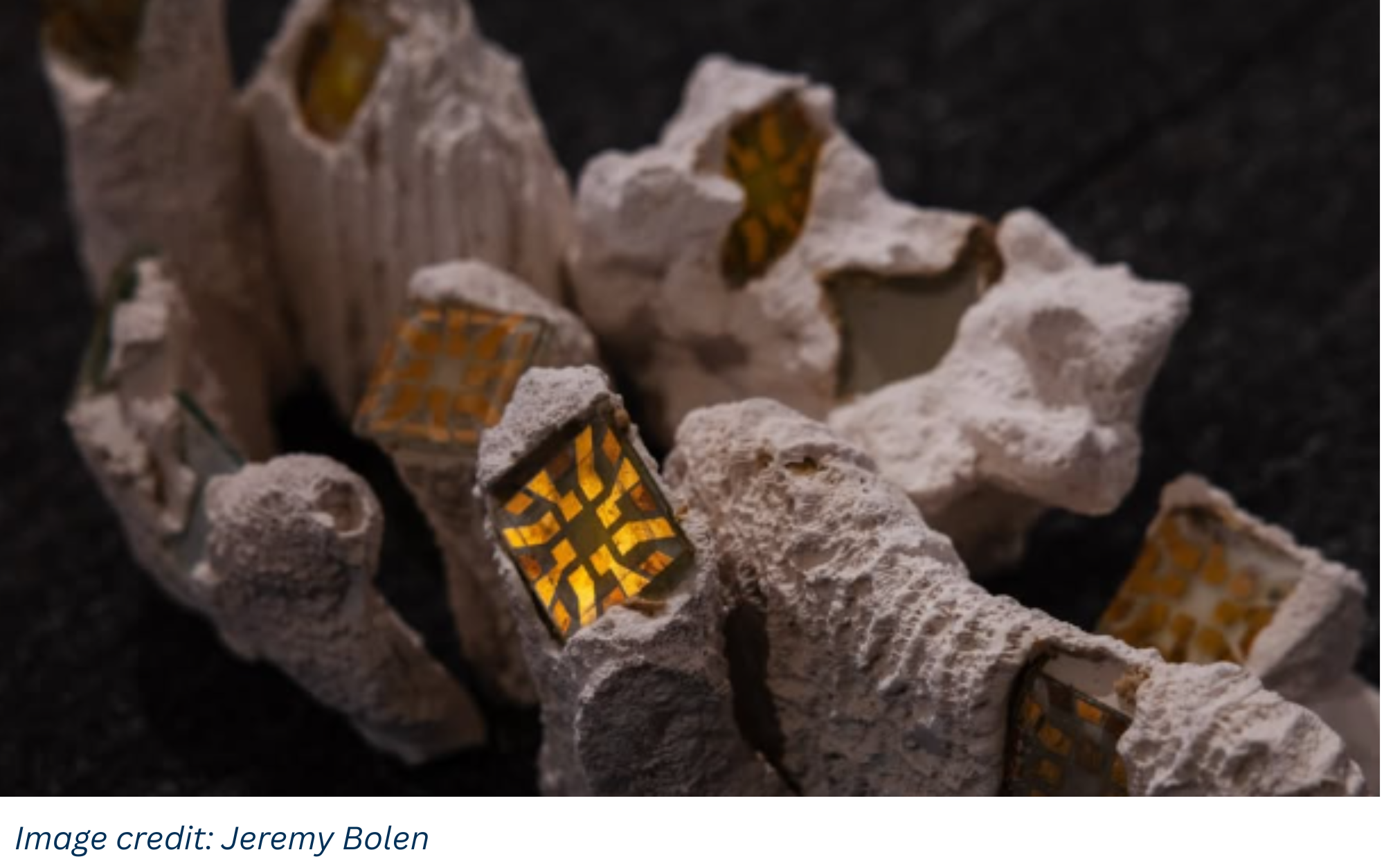
Through their work, Correa-Baena and Bolen invite audiences to reflect on the role of technology in shaping humanity's relationship with the natural world.
"We want visitors to think about how the same sun that sustains life can also become something we increasingly try to capture, control, or even manipulate through technology," Correa-Baena said.
For Correa-Baena, the experience reinforced the value of interdisciplinary collaboration and the unique perspectives that emerge when artists and scientists work together.
"Working with artists changes the questions we ask," he said. "Science often focuses on understanding and solving problems, while art can challenge the assumptions behind those problems and open up entirely different ways of communicating them."
Bolen echoed the importance of the partnership.
"It's been a pleasure working with Juan-Pablo as we learn from each other and understand the power and complexity of art and science collaborations," Bolen said. "I hope audiences who interact with our work understand how their movement and choices matter, and the implications of not funding and supporting sustainable energy methods such as solar."
The exhibition also marks another high-profile public presentation of Correa-Baena's work. While he has previously contributed to installations viewed by audiences at locations such as Hartsfield-Jackson Atlanta International Airport, Crossing Grounds expands that reach to an international audience.

"It is exciting to see this collaboration reach an international audience, particularly through the Korea Foundation," Correa-Baena said. "It shows that research developed at Georgia Tech can participate in broader global conversations about energy, technology, and culture."
Correa-Baena believes exhibitions such as Crossing Grounds create valuable opportunities for dialogue across disciplines, particularly within university environments.
"They create spaces where disciplines that normally operate separately can interact," he said. "At a place like Georgia Tech, that can lead not only to new ways of communicating research, but also to new questions, collaborations, and ideas that would not emerge within a single discipline."
By bringing together artists, designers, scientists, and technologists, Crossing Grounds: Art, Design, and Technology demonstrates how creative collaboration can spark new perspectives on some of society's most pressing challenges while engaging audiences far beyond traditional academic settings.