
As graduation season approaches, campus energy shifts toward celebration, reflection, and the promise of new beginnings. It’s a perfect moment to shine a light on the remarkable achievements of our alumni, who once walked the same halls and now carry the spirit of the School of Materials Science and Engineering into industries, communities, and innovations around the world. In honor of the season, we’re spotlighting Tammy McCoy, whose journey continues to inspire our current students and remind us not only of the lasting impact of a Georgia Tech education but also of life beyond the classroom and the paths shaped by curiosity, resilience, and ambition.
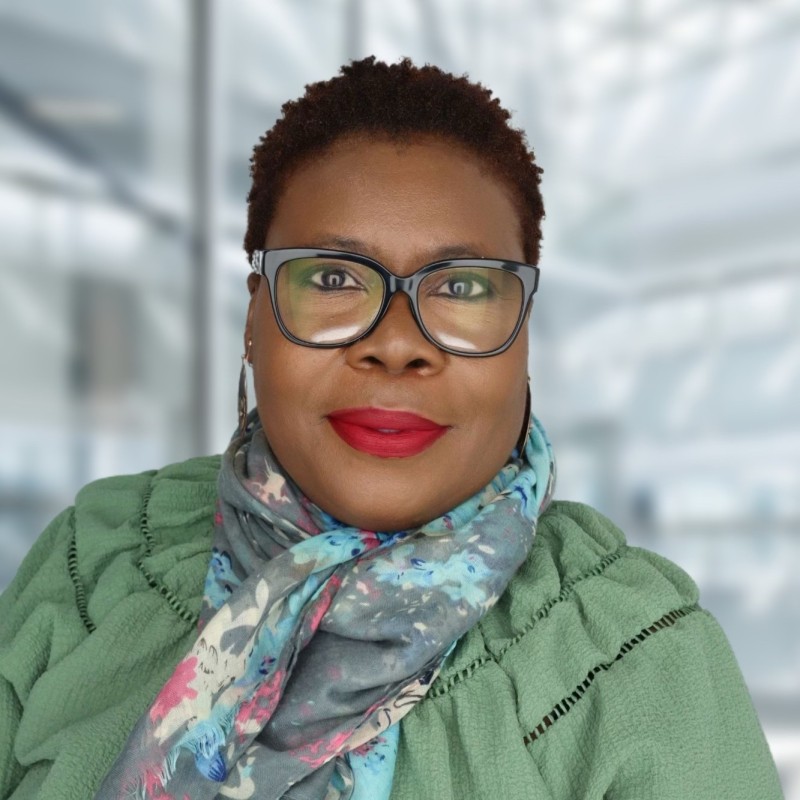
1. What initially inspired you to pursue a degree in Materials Science and Engineering, and how has that decision shaped your professional path?
My decision to pursue Materials Science and Engineering emerged at the intersection of identity, community, and intellectual discovery. As an undergraduate mechanical engineering student at Mississippi State University in the early 90s, I was one of the very few women in the program and one of only three Black women in my graduating class. Although that environment was challenging, the three of us built a strong sense of community and earned a reputation for hard work and high-quality work. That experience shaped my early understanding of the power of belonging and collective excellence.
During that time, I took a required materials course offered through the Department of Chemical Engineering, and I was IMMEDIATELY captivated. Unlike many examples in mechanical engineering courses, which often referenced experiences far removed from my upbringing in the Mississippi Delta, the concepts in materials felt accessible and tangible. For the first time, I had a true “lightbulb” moment. I not only deeply understood the material, but I could also explain it clearly to others. I found myself tutoring classmates during study sessions and discovering that I loved helping people grasp complex ideas.
Up until that course, I didn’t even know Materials Science and Engineering was a distinct discipline. But shortly afterward, a recruiter from Auburn University visited campus with the goal of diversifying their Materials Engineering program. I introduced myself, visited campus, applied, and was accepted. That decision launched my academic journey into the materials field and ultimately shaped my broader professional path.
Studying materials science trained me to think structurally and systemically. That framework for understanding complex systems continues to guide my work today. Whether I am designing professional development programs, mentoring students, or leading institutional initiatives, I still approach problems like an engineer.
2. Can you share a project or experience from your time in the MSE program that still influences your work or thinking today?
Two pivotal experiences during my time in the MSE program continue to shape me both professionally and personally. The first was studying under my advisor, Dr. Joe Cochran. Dr. Cochran was committed to excellence in both thought and scholarship. He was deeply committed to his research and was unwavering in his standards. However, what influenced me most was the balance he modeled. Although he loved his work, Dr. Cochran never allowed it to eclipse what mattered most to him: his family. I often joke that we could be in the middle of a research meeting, but if his wife called and needed him, he would pause everything without hesitation. In an environment where productivity often defines success, he modeled something deeper and longer lasting: integrity, priorities, and presence. His example reshaped my understanding of what it means to be both excellent and whole. Today, as I mentor students, postdocs, staff, and faculty, I encourage them not only to pursue achievement but to define success on their own terms.
The second experience was the profound sense of community I felt within the School of Materials Science and Engineering. A significant part of that community came from the MSE staff, including the late Marlene White. Marlene, in particular, felt like family. We laughed together, sometimes cried, shared lunches and coffee, celebrated milestones, and navigated challenges.
As someone without family in Atlanta, they created a space where I felt seen, supported, and at home. Their care extended beyond administrative support. It was relational and deeply human. That experience solidified a truth that still guides my work today. And that truth is relationships matter. Excellence does not exist apart from community. Whether I am designing workshops, mentoring, or teaching, I strive to create environments where high standards and human connection coexist. That philosophy was not learned from a textbook, but it was modeled for me in the MSE community.
3. What does your current role involve, and what aspects of materials science do you draw on most in your day-to-day work?
My current role as Assistant Director for TA Development and Future Faculty Initiatives in the Georgia Tech Center for Teaching and Learning involves designing and leading professional development programs for future faculty (graduate students and postdocs) and teaching assistants (graduate and undergraduate). I oversee teaching development initiatives, coordinate the Tech to Teaching Program, mentor our Graduate Teaching Fellows cohort, and design and facilitate workshops focused on learner-centered teaching, academic career preparation, and leadership in higher education. At its core, my work is about preparing the current generation (TAs) and the next generation (future faculty) of educators and scholars to thrive.
Although my work is now centered in teaching and faculty development rather than a traditional engineering laboratory, I draw on my Materials Science and Engineering training every day. At its base level, Materials taught me to think in systems, such as how processing shapes structure, how structure influences properties, and how properties determine performance. This mindset translates directly into my work as an educational developer. For example, I regularly ask, “How do teaching practices influence learning outcomes? What ‘processing conditions’ produce environments where people can perform at their highest potential?” In many ways, I still identify as an engineer. The materials may be different (i.e., people, policies, programs instead of ceramics and metals), but the mindset remains the same and is centered around understanding the structure, analyzing the variables, and designing for performance.
4. Looking back, what skills or lessons from your MSE education have been most valuable in your career so far?
If I had to summarize the most valuable lesson from my MSE education in one word, it would be perseverance. At the time, I called it, “sticktoitiveness,” which to me exemplified a never-give-up mindset that carried me through failed experiments, broken equipment, senseless data, and moments of doubt that are inevitable to every graduate student. My academic journey, in general, and MSE at Tech, specifically, taught me that meaningful progress requires patience and resilience. Because research doesn’t always unfold in a straight line, I learned that you must adjust processing parameters.
reanalyze results, refine the approach, and try-try-try again. That disciplined persistence became a core part of who I am.
In every role I have held since earning my degree, I have carried that mindset with me. I approach new challenges not as obstacles, but as opportunities to build, refine, improve, and produce something meaningful. Whether I am leading a workshop, teaching a course, mentoring a protégé, or piloting a new program, I rely on the same principle that sustained me through the MSE program, and that is to commit to the work, learn from setbacks, and stay the course. Perseverance has never failed me, and it continues to be one of the greatest gifts I received from my MSE education.
5. What advice would you give to current MSE students who are exploring career options or preparing to enter the field?
My advice to current MSE students is simple: don’t be afraid to try something new. There is no such thing as a perfect job or perfectly mapped career path. What matters most is what you learn along the way. Every opportunity contributes to your growth, whether it confirms your interests or redirects you.
I also encourage students to be confident in who they are, what they know, and the value they bring. An MSE degree equips you with analytical thinking, problem-solving skills, and the ability to navigate complexity. Those skills are transferable across industries, roles, and sectors, even beyond traditional engineering paths. I’m a perfect example. As someone with three engineering degrees, I was expected to pursue the traditional academic pathway to become a tenure-track professor. However, I am proof- positive that my credentials thoroughly prepared me for this alternative pathway as a non-tenure-track faculty member at a highly ranked R1 institution. And I walk this alternative path proudly.
In short, know what you bring to the table, own your strengths, and do not allow anyone or any circumstance make you question your worth. Your perspective, your training, and your lived experiences are assets. Trust that.